


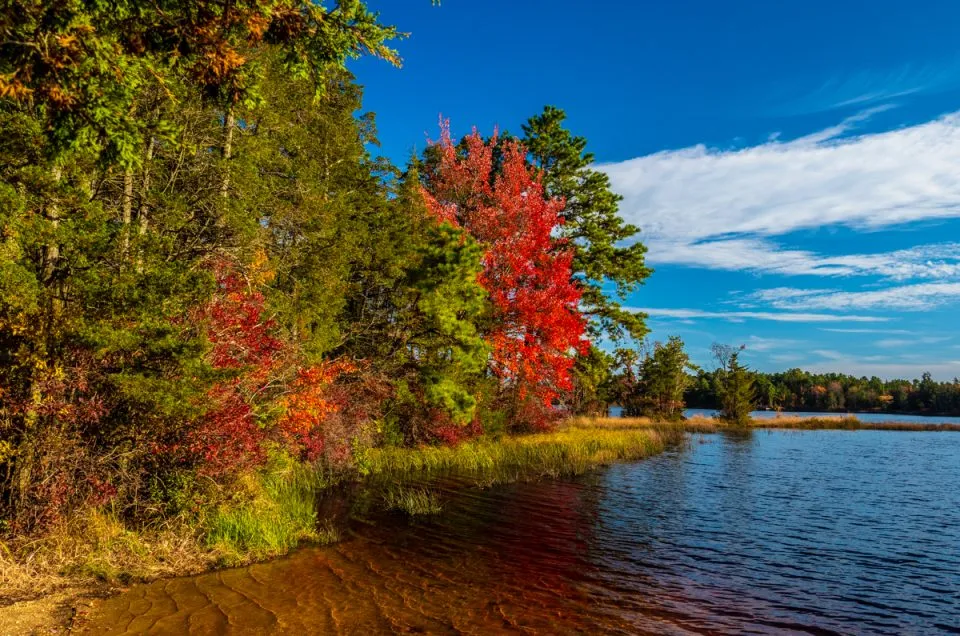
Autumn at Whitesbog NJ
First Night of Autumn at Whitesbog is a fascinating historic village located within the Pinelands of New Jersey, specifically in Browns Mills, Pemberton Township, Burlington County. It’s nestled in Brendan T. Byrne State Forest and is renowned for its pivotal role in the agricultural history of the United States, particularly with cranberries and blueberries. Here’s a rundown of what makes Whitesbog special:
History
Whitesbog’s story begins in the mid-19th century when James A. Fenwick purchased 490 acres of land in 1857, previously part of the Hanover Furnace iron industry, to start a cranberry farm. After Fenwick’s death in 1882, his son-in-law, Joseph J. White, took over and expanded the operation, eventually making it the largest cranberry farm in New Jersey by the early 1900s. The real game-changer came with Joseph’s daughter, Elizabeth White. Starting in 1893, she worked on the family farm and, in the early 1900s, collaborated with Dr. Frederick V. Coville to develop the first cultivated highbush blueberry. This breakthrough, achieved in 1916, revolutionized the blueberry industry and put Whitesbog on the map as the birthplace of the cultivated blueberry, now a major crop in the region.
The Village
The village itself grew into a company town, complete with worker housing, a general store, and other facilities, reflecting its peak as a bustling agricultural hub. By 1967, the New Jersey Department of Environmental Protection acquired the land, incorporating it into what was then Lebanon State Forest (now Brendan T. Byrne State Forest). In 1982, the Whitesbog Preservation Trust was formed to lease and preserve the site, which spans about 3,000 acres of cranberry bogs, blueberry fields, reservoirs, and Pine Barrens forests. It’s listed on both the National and State Registers of Historic Sites, underscoring its cultural and historical significance.
What’s There Today
Today, Whitesbog Historic Village offers a blend of natural beauty and historical charm. The village includes preserved buildings like the General Store (open weekends from February to December), worker cottages, and other structures from its heyday. The surrounding landscape features cranberry bogs—some still active—and blueberry fields, interwoven with sugar sand roads and Pine Barrens forests. It’s a living snapshot of early 20th-century rural life, with a focus on the berry industries that shaped the region.
The Whitesbog Preservation Trust and the Pinelands Institute for Natural and Environmental Studies (P.I.N.E.S.) keep the site active with educational programs, tours, and events. The General Store serves as a hub, offering maps, local products like cranberry and blueberry goods, and Pinelands-themed items. Self-guided driving tours are available via maps at the kiosk, though visitors are warned that the sandy, narrow roads are navigated at their own risk—perfect for an adventurous night shoot like yours!
Why It’s Special
Whitesbog isn’t just about berries; it’s a window into the Pine Barrens’ unique ecosystem and cultural heritage. The acidic, sandy soils that challenged early settlers fostered a distinctive environment, and Whitesbog’s innovations helped turn that challenge into an asset. It’s also tied to broader Pinelands lore—think Jersey Devil tales and the rugged, untamed vibe of the region. Your night photography likely captured some of that eerie, timeless quality, with the bogs and forests under moonlight offering a stark, beautiful contrast.
If you’ve got specific shots from your visit you’d like me to analyze, feel free to upload them or describe them—I’d be happy to dive in and share some thoughts! What drew you to shoot there at night? Was it the stillness, the history, or something else?


spoke live here


I thought I should shoot this event at Whitesbog, in the Pinelands. I hope you enjoy these photographs at night as much as we did.


Milky Way
https://www.louisdallaraphotographWhitesbog-landscape-blueberry-capital-of-the-world
You might also like



Leave a reply