



Tree Leaves in Color
I love all trees and especially in the fall when they put on a specular show.
“You expected to be sad in the fall. Part of you died each year when the leaves fell from the trees and their branches were bare against the wind and the cold, winter’s light. But you knew there would always be the spring, as you knew the river would flow again after it was frozen. When the cold rains kept on and killed the spring, it was as though a young person died for no reason.”
? Ernest Hemingway, A Moveable Feast
-

- Burning leaves
-

- Mushrooms
-

- Back lite leaves
-
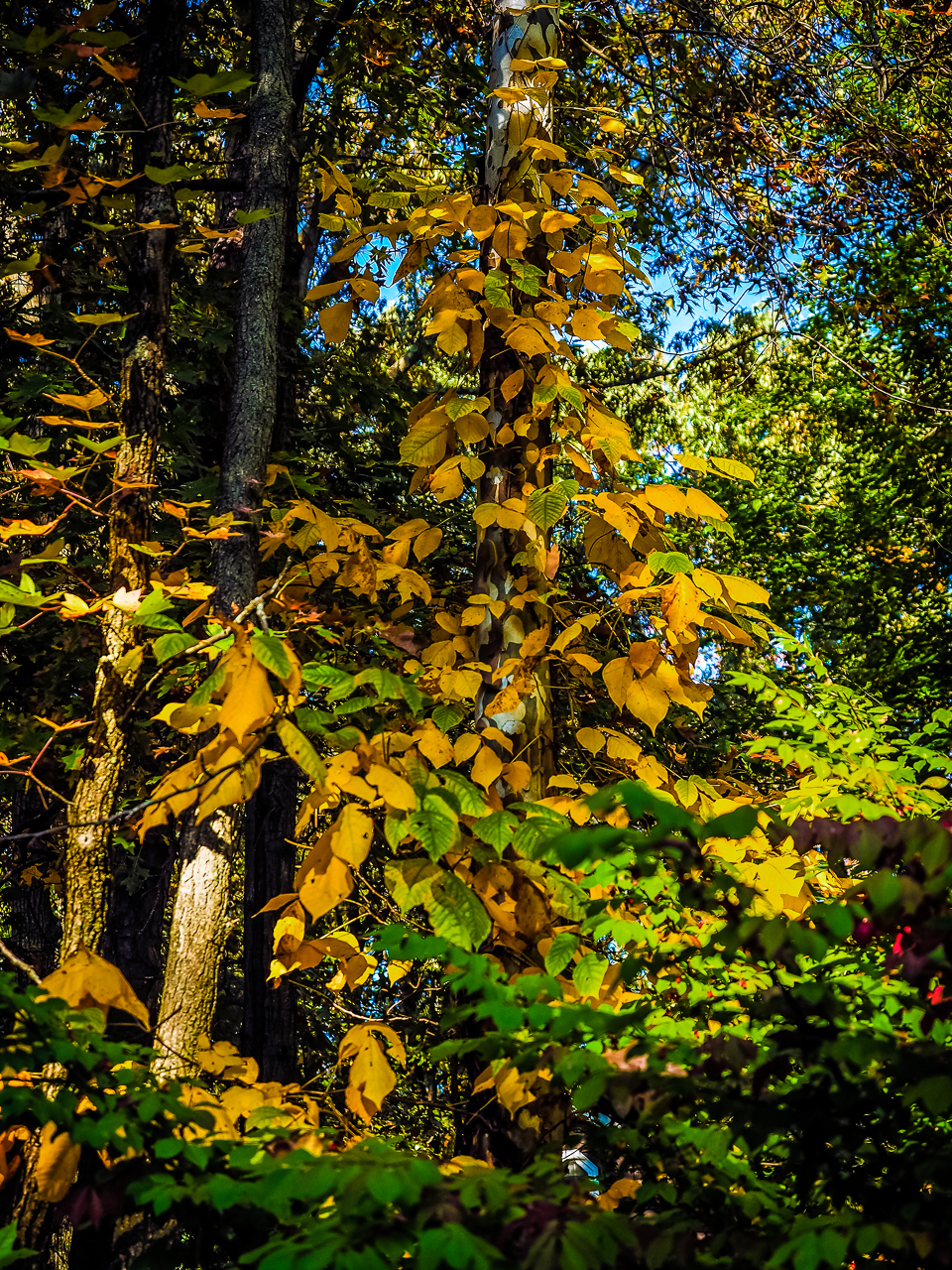
- The woods
-

- Sassafras: Root Beer
Keep reading to discover eight things you may not know about leaves in the fall.
Fall foliage varies from red, orange, and yellow, depending on the type of tree.
Chlorophyll is what makes leaves green. This pigment disappears in the fall which allows other colors (red, orange, or yellow) to be more prominent.
Fewer hours of daylight affects leaves more than cooler temperatures do. Leaves rely heavily on sunlight to grow.
Leaves turn orange from carotene – the same chemical that makes carrots orange.
Despite the name, the leaves of red maples can turn yellow when the seasons change.
Sugar maple trees showcase a broad range of colors with green leaves in the summer followed by yellow, then orange, and then red leaves in the fall.
Leaf color vibrancy can be affected by weather temps. Leaves turn vibrant colors when a string of warm summer days is followed by crisp – but not quite freezing – nights.
A sick tree is easy to recognize in the fall. Look for a tree that changes in color and loses its leaves well before the other trees of the same species.
Last-leaves-of-autumn
Infrared-autumn-fall-colors
Golden-red-autumn-reflection
You might also like

2 Comments
wonderful autumn pics Lou!
Thanks John